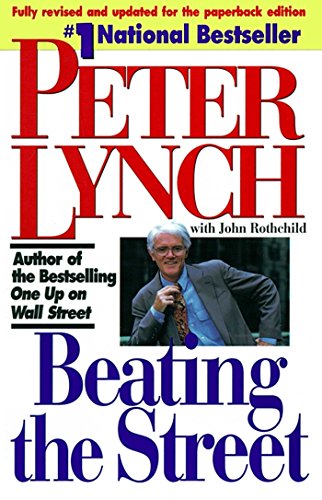
⚡️ What is Beating the Street about?
Beating the Street is legendary investor Peter Lynch’s guide to how ordinary individuals can achieve extraordinary investment results. As a follow-up to his classic “One Up on Wall Street,” this book moves from theory to practice, showcasing the exact methods Lynch used to achieve his astounding track record managing the Fidelity Magellan Fund. The core message is empowering: you don’t need a Wall Street pedigree to succeed in the stock market. Instead, your everyday experiences and observations provide a powerful edge over the so-called experts. Lynch demystifies the process of finding “tenbaggers” (stocks that increase tenfold) by encouraging readers to invest in what they know. He fills the book with engaging anecdotes, case studies of his own wins and losses, and a framework for researching companies, making the complex world of finance accessible, logical, and even fun for the dedicated amateur investor.
🚀 The Book in 3 Sentences
- Individual investors can beat the market by leveraging their unique, real-world knowledge to discover great companies long before professional analysts do.
- Successful Beating the Street requires diligent research, a long-term perspective, and the emotional discipline to ignore market noise and hold onto winning stocks.
- The key to wealth is not in market timing or complex strategies but in identifying and patiently holding shares of well-understood, fundamentally sound businesses.
🎨 Impressions
My impression of Beating the Street is that it’s incredibly refreshing and actionable. Unlike many finance books that are either overly academic or filled with jargon, Lynch writes with the clarity and humor of a seasoned storyteller. He makes you feel like you’re right there with him, touring companies and making investment decisions. What struck me most was the profound simplicity of his core philosophy: invest in what you see and understand in your daily life. This book isn’t about secret formulas; it’s about common sense, curiosity, and patience. It gave me a renewed sense of confidence that the stock market isn’t an exclusive club, but a field where an observant individual can truly thrive and achieve remarkable results by applying these practical Beating the Street strategies.
📖 Who Should Read Beating the Street?
This book is perfect for the individual investor who feels intimidated by Wall Street but is eager to take control of their financial future. If you enjoyed “One Up on Wall Street,” this is the essential practical companion. It’s also ideal for anyone who believes their personal and professional experiences give them unique insights into certain industries. Lynch’s Beating the Street techniques are especially valuable for those with a long-term horizon, who prefer fundamental analysis over speculative trading, and who are looking for a step-by-step guide to building a portfolio of stocks they can truly understand and believe in for the long haul.
☘️ How the Book Changed Me
Reading Beating the Street fundamentally shifted my perspective from fearing the market to embracing it as a land of opportunity. It changed my behavior from a passive observer of financial news to an active investigator of the world around me. I now see shopping malls, restaurants, and new product launches not just as consumer experiences, but as potential investment research.
- I’ve stopped trying to predict market movements and now focus solely on the long-term prospects of individual businesses I understand.
- I developed the discipline to do my own “scuttlebutt” research, talking to employees and customers before investing.
- I learned to view market downturns not as catastrophes, but as buying opportunities for great companies at discounted prices.
✍️ My Top 3 Quotes
- “Never invest in any idea you can’t illustrate with a crayon.”
- “It isn’t the head but the stomach that determines the fate of the stockpicker.”
- “The best stock may be the one you already own.”
📒 Summary + Notes
Beating the Street is a masterclass in practical investing, where Peter Lynch generously shares the playbook that made him a legend. The book is structured around his core belief that the amateur investor has a distinct advantage over professionals. By focusing on industries and companies you encounter in your daily life, you can spot promising investment opportunities long before the Wall Street herd catches on. Lynch walks us through his thought process, from identifying a promising company at the mall to digging into its financial statements and assessing its long-term growth potential. He uses numerous real-world examples from his time at the Magellan Fund, illustrating both his spectacular successes and humbling mistakes to provide a balanced and realistic view of what it takes to succeed in the stock market over the long term.
Preface
In the preface, Lynch sets a light-hearted and approachable tone, introducing his famous “Peter’s Principles.” These are witty, memorable rules that encapsulate his investment philosophy. He immediately establishes that investing doesn’t have to be a joyless, all-consuming activity. His first principle, about operas and football games, humorously suggests that a balanced life is crucial. This section serves as a friendly invitation, assuring readers that the journey to beating the street can be both profitable and enjoyable, and that common sense is more valuable than complex financial models.
- Peter’s Principle #1: When the operas outnumber the football games three to zero, you know there is something wrong with your life.
- Lynch emphasizes the importance of maintaining a balanced life outside of investing.
- He introduces the idea that simple, memorable rules can guide complex decisions.
- The preface establishes the book’s accessible and non-intimidating tone.
- He hints that the best investment insights come from living a normal, observant life.
- This section frames investing as an activity that should complement, not consume, your life.
Introduction
Lynch begins by making a compelling case for stocks over all other asset classes, using historical data to show their superior long-term returns. He argues that while bonds and CDs seem safer, they severely limit wealth creation. The core argument of Beating the Street is introduced here: an amateur who diligently studies companies within their circle of competence can outperform 95% of professional money managers. Lynch stresses that the biggest challenge isn’t intellect, but emotional fortitude—the “stomach” to stick with your investments through market volatility and ignore the constant stream of worrying news that scares so many people out of the market at the worst possible times.
- Over 64 years, stocks dramatically outperformed bonds, turning $100,000 into $25.5 million versus $1.6 million.
- Peter’s Principle #2: Gentlemen who prefer bonds don’t know what they’re missing.
- Your ultimate success depends on your ability to ignore the worries of the world long enough to let your investments succeed.
- Lynch famously states, “It isn’t the head but the stomach that determines the fate of the stockpicker.”
- He champions the idea that individual investors have a real edge over professionals.
- The introduction lays the foundation for the book’s focus on long-term, research-driven investing.
One: The Miracle of St. Agnes
This chapter opens with the inspiring story of a group of seventh-graders from St. Agnes school who created a mock portfolio that trounced the S&P 500. Their success, Lynch argues, proves his central thesis: you don’t need to be a genius to win in the stock market. The students applied simple, common-sense logic, investing in companies they knew and understood, like The Gap and Wal-Mart. Lynch uses this story to introduce another of his principles: never invest in an idea you can’t explain simply. He highlights the importance of focusing on understandable businesses and the power of long-term growth, showing how a portfolio of just 5-10 well-chosen companies can deliver phenomenal returns.
- The St. Agnes students’ portfolio proved that amateurs can beat the market using basic research.
- Peter’s Principle #3: Never invest in any idea you can’t illustrate with a crayon.
- You should buy a stock because you know a lot about it, not simply because it’s cheap.
- In a group of five growth stocks, you can expect three to perform well, one to disappoint, and one to be a spectacular winner.
- The chapter reinforces the “invest in what you know” philosophy with a real-world example.
- Lynch stresses that losing money is easy and fast, but making money requires patience and time.
Two: The Weekend Worrier
Lynch tackles the psychological trap of constantly worrying about the market. He argues that the key to making money in stocks is not to get scared out of them. For the long-term investor, watching the news and fretting over every geopolitical event is not only pointless but dangerous, as it leads to panic selling. Lynch describes market corrections as a normal and recurring event, like a blizzard in Minnesota. A successful investor, he says, should be prepared for these downturns and even welcome them as opportunities to buy great companies at lower prices. This chapter is a lesson in emotional discipline and the importance of focusing on business fundamentals, not headlines.
- The key to making money in stocks is not to get scared out of them; this point cannot be overemphasized.
- Peter’s Principle #4: You can’t see the future through a rearview mirror.
- A decline in stocks is a normal, recurring event, and you should be prepared to ride it out.
- The best way to not be scared out of stocks is to invest regularly, such as through a 401(k) or investment club.
- Lynch compares a successful stock picker to a Minnesotan dealing with freezing weather: you know it’s coming and you’re ready.
- He suggests that when pessimism is rampant, it might be the perfect time to be buying stocks.
Three: A Tour of the Fund House
In this chapter, Lynch turns his attention to mutual funds, the very vehicle he managed so successfully. He acknowledges that the sheer number of funds can be overwhelming and confusing for investors. His primary advice is to choose a good fund and stick with it, rather than constantly switching in a futile attempt to time the market. He cautions against paying high fees for mediocre performance, using the analogy of paying Yo-Yo Ma to play a radio. Lynch emphasizes the importance of stock funds for long-term growth and advises readers to avoid bond funds, suggesting it’s better to buy bonds directly. The overarching message is to find a consistent, long-term performer and have the patience to let it work for you.
- The number of mutual funds now exceeds the number of stocks on the NYSE and AMEX combined.
- Peter’s Principle #5: There’s no point paying Yo-Yo Ma to play a radio.
- Peter’s Principle #6: As long as you’re picking a fund, you might as well pick a good one.
- Constantly switching between funds is an expensive and harmful habit for your net worth.
- Lynch advocates for putting as much money as possible into stock funds for long-term growth.
- He suggests that a “dartboard method” of buying the whole market (via an index fund) is a perfectly reasonable strategy.
Four: Managing Magellan / The Early Years
Lynch offers a fascinating look into the early days of his career managing the Magellan Fund. He describes his approach as being like an investigative reporter, constantly searching for clues and turning over rocks to find undervalued companies. He was drawn to simple, understandable businesses like fast-food restaurants. A key mistake he shares is “pulling out the flowers and watering the weeds”—selling his best-performing stocks to hold onto his losers. This chapter provides valuable insights into his learning process, emphasizing the importance of identifying great companies and having the conviction to hold them. He also introduces a principle about corporate extravagance being a negative sign for shareholders.
- Peter’s Principle #7: The extravagance of any corporate office is directly proportional to management’s reluctance to reward shareholders.
- Lynch was attracted to fast-food restaurants because their business models were easy to understand and replicate.
- He admits to the common mistake of “pulling out the flowers and watering the weeds” in his early years.
- His method was akin to an investigative reporter’s: reading documents and talking to company sources.
- He found that there were always undervalued companies to be found somewhere in the market.
- When great companies sell at very low price-to-earnings ratios, it’s an almost can’t-lose opportunity for the stock picker.
Five: Magellan / The Middle Years
This chapter details the growth of the Magellan Fund and the refinement of Lynch’s investment strategies. He credits his success to the hard work of his team and the principle of giving people full responsibility. A key theme is the power of patience and long-term compounding. Lynch explains the Rule of 72 to illustrate how quickly money can grow at high rates of return. He discusses his focus on retail and restaurant chains, which could sustain 20% growth rates for over a decade. Lynch also shares a specific market-timing indicator related to bond yields versus stock dividends, but his overarching message is that bargains are found during market sell-offs, which should be seen as opportunities, not disasters.
- Lynch believed in giving his staff full responsibility, which led them to live up to the challenge.
- If you can’t explain an investment in simple terms a fifth grader can understand, you shouldn’t be in it.
- The Rule of 72 helps determine how quickly your money will double based on its annual return.
- Peter’s Principle #8: When yields on long-term government bonds exceed the dividend yield of the S&P 500 by 6 percent or more, sell your stocks and buy bonds.
- Lynch subscribed to Edison’s theory that “investing is ninety-nine percent perspiration.”
- He viewed market corrections as opportunities to acquire more shares at low prices, the way great fortunes are made.
Six: Magellan / The Later Years
In the later years of managing Magellan, Lynch shares lessons learned from a larger portfolio and more market experience. He emphasizes that not all stocks are equal and that some deserve a permanent place in a portfolio. He introduces several more “Peter’s Principles,” including the idea that the best stock might be the one you already own and that a big drop in price is a sure cure for taking a stock for granted. A crucial part of this chapter is on portfolio management and the importance of containing losses. Lynch argues there is no shame in losing money on a stock, but it is shameful to hold on—or buy more—when the fundamentals are deteriorating. He stresses the need to know when to sell.
- Peter’s Principle #9: Not all common stocks are equally common.
- Peter’s Principle #10: Never look back when you’re driving on the autobahn.
- Peter’s Principle #11: The best stock may be the one you already own.
- Peter’s Principle #12: A sure cure for taking a stock for granted is a big drop in the price.
- Peter’s Principle #13: Never bet on a comeback while they’re playing “Taps.”
- He stresses that containing your losses is a critical aspect of successful portfolio management.
Seven: Art, Science, and Legwork
Lynch breaks down the process of stock picking into its core components: art, science, and legwork. He argues that too much of any one component is dangerous. The “art” is the creative part of seeing a story or a potential that others miss. The “science” is the hard numbers and financial analysis. The “legwork” is the real-world investigation—talking to companies, suppliers, and customers. Lynch uses the metaphor of looking for grubs under rocks: the more companies you investigate, the more great ideas you’ll find. This chapter is a call to action for investors to get out and do their own primary research, combining quantitative analysis with qualitative, real-world observations to find hidden gems.
- Stockpicking is a blend of art, science, and legwork; an excess of any one is dangerous.
- The “art” involves seeing the potential story behind a company.
- The “science” involves analyzing the financial statements and numbers.
- The “legwork” involves talking to company insiders, competitors, and customers.
- Lynch’s strategy of searching for companies is like looking for grubs under rocks: the more you look, the more you find.
- He emphasizes that successful investing requires a combination of all three elements.
Eight: Shopping For Stocks / The Retail Sector
This chapter is a masterclass in how to apply Lynch’s methods to a specific sector: retail. He introduces his famous principle, “If you like the store, chances are you’ll love the stock.” Lynch walks through the key metrics for analyzing retail companies, with same-store sales being paramount. He discusses the relationship between a stock’s price-to-earnings (P/E) ratio and its growth rate, suggesting that as a rule of thumb, a stock should sell at or below its growth rate. Using the example of Wal-Mart, he shows that even a stock that has already gone up 50-fold can continue to be a great investment if the company hasn’t saturated its market. The key is to focus on expansion, debt levels, and consistent execution.
- Peter’s Principle #14: If you like the store, chances are you’ll love the stock.
- Same-store sales is one of the most critical factors in analyzing a retail operation.
- A stock should generally sell at a P/E ratio that is at or below its growth rate.
- Companies that grow too fast (e.g., over 25%) tend to self-destruct and cannot sustain that pace.
- The best way to handle a great company with a high stock price is to make a small commitment and buy more during a sell-off.
- Lynch uses Wal-Mart to illustrate that a stock can go up many times over even after becoming a large company.
Nine: Prospecting in Bad News
Lynch reveals a powerful technique: finding opportunities in sectors where sentiment is at its worst. When everyone believes an industry has gone “from bad to worse,” it’s often the perfect time to buy the strongest companies in that group. He illustrates this with his investments in Pier 1 Imports, Sunbelt Nursery, and General Host during the real estate collapse of the late 1980s. Lynch explains how to analyze these situations, looking for companies with strong balance sheets that can survive the downturn. He delves into balance sheet analysis, explaining the importance of the equity-to-assets ratio, the dangers of too much inventory, and the significance of insider buying as a positive signal.
- A profitable technique is to buy the strongest companies in an industry when sentiment is at its worst.
- Lynch used this strategy to invest in retail-related companies during the real estate collapse.
- When a company buys back shares with borrowed money, it gets a double tax advantage.
- Peter’s Principle #15: When insiders are buying, it’s a good sign—unless they happen to be New England bankers.
- You want to see a balance sheet with at least twice as much equity as debt.
- He warns against companies with excessive inventory, as this can overstate earnings.
Ten: My Lessons on the 1987 Crash
Lynch reflects on the stock market crash of October 1987, a terrifying event where the market dropped over 20% in a single day. His key lesson is that even he, the legendary Peter Lynch, couldn’t predict it. The fundamental takeaway is not to try and time such events but to be prepared for them. Lynch’s advice during the crash was to review your holdings. If the reasons you bought the stocks in the first place were still valid, you should hold on. If anything, the crash presented a buying opportunity. This chapter reinforces the importance of focusing on the long-term business fundamentals and not getting swayed by short-term market panic, even in the most extreme circumstances.
- Not even Peter Lynch could predict the 1987 market crash.
- The key lesson is not to panic-sell during a market crash.
- Instead, you should review the fundamental reasons for owning each stock in your portfolio.
- If the investment thesis is still intact, you should hold on and consider buying more.
- Market crashes are unpredictable but inevitable, and they create buying opportunities.
- This event reinforced Lynch’s belief that focusing on business fundamentals is more important than watching market prices.
Eleven: Blossoms in the Desert / Great Companies in Lousy Industries
Here, Lynch presents a counterintuitive but highly effective strategy: investing in great companies within lousy industries. He argues that “great” industries attract too much competition, making it hard for any single company to dominate. In contrast, a slow-growing or “lousy” industry forces weaker players out, allowing the strong survivors to capture an ever-increasing market share. Lynch identifies the characteristics of these winners: they are low-cost operators, avoid debt, treat their employees well, and find overlooked niches. He prefers a company dominating a stagnant market over one struggling in an exciting one, introducing the principle that competition is never as healthy as total domination.
- Lynch is always on the lookout for great companies in lousy, slow-growing industries.
- In a great industry, too much competition can erode profits for everyone.
- Peter’s Principle #16: In business, competition is never as healthy as total domination.
- Great companies in lousy industries are low-cost operators, avoid debt, and find overlooked niches.
- Peter’s Principle #17: All else being equal, invest in the company with the fewest color photographs in the annual report.
- These companies often grow faster than those in more fashionable, high-growth industries.
Twelve: It’s A Wonderful Buy
This chapter focuses on a specific, unloved sector: Savings and Loans (S&Ls). Lynch saw a huge opportunity in the S&L industry after it had been battered by bad press and regulatory issues. He argues that when even the Wall Street analysts are bored with a sector, it’s often time to start buying. Lynch explains how to analyze S&Ls, focusing on a key metric: the equity-to-assets (E/A) ratio. He suggests that an E/A ratio of at least 7.5% is a sign of a financially healthy S&L. This chapter is a perfect example of his strategy of prospecting in bad news and finding value where others aren’t looking, turning a “boring” sector into a source of significant gains.
- Peter’s Principle #18: When even the analysts are bored, it’s time to start buying.
- Lynch found great opportunities in the S&L sector after it had fallen out of favor.
- He explains the importance of the Equity-to-Assets (E/A) ratio for analyzing S&Ls.
- An E/A ratio of at least 7.5% is a sign of a financially sound S&L.
- This chapter reinforces the theme of finding value in overlooked and unloved industries.
- He demonstrates that deep research into a boring sector can uncover fantastic investment bargains.
Thirteen: A Closer Look at the S&Ls
Lynch provides a more detailed, behind-the-scenes look at his investment in the S&L sector. He shares his “Fannie Mae Diary,” which chronicles his research and thought process as he built a large position in the company. This chapter is a testament to the power of patience and conviction. Lynch faced constant skepticism and dire predictions from other respected investors, but he knew the story better than they did. He had faith in his research and held on for several years. His patience was eventually rewarded with massive gains. The key lesson is that there is always something to worry about, and success comes from knowing your investment story better than the critics and having the courage to stick with it.
- Lynch shares the detailed story of his successful investment in Fannie Mae.
- He emphasizes that there is always something to worry about with any investment.
- Success requires knowing the investment story better than the skeptics and having faith in your research.
- His Fannie Mae investment demonstrates that several years of patience can be rewarded in a very short time.
- Lynch warns that it’s generally a bad thing when a company increases the number of shares outstanding.
- This chapter serves as a powerful case study in long-term conviction.
Fourteen: A Little About Foreign Stocks
While Lynch’s primary focus was on U.S. stocks, he dedicates a chapter to the topic of international investing. He acknowledges the opportunities that exist abroad but also highlights the additional challenges. These include political risks, different accounting standards, currency fluctuations, and less reliable information. Lynch argues that the U.S. market is difficult enough, with thousands of smart people studying the same stocks. He concludes that for most individual investors, it’s better to stick with what they know. He’d rather invest in a solid U.S. emerging-growth stock fund than try to navigate the complexities of foreign markets, where speculation can play a much larger role.
- Lynch acknowledges the opportunities in foreign stocks but warns of the added complexities.
- Challenges include political risk, different accounting rules, and currency fluctuations.
- In the U.S., you compete with thousands of smart people; this is also true abroad, but with less transparency.
- Speculation often plays a larger role in foreign markets like Japan.
- For most individual investors, Lynch recommends sticking to what they know in the U.S. market.
- He suggests a solid U.S. growth stock fund is a better bet than trying to pick individual foreign stocks.
Fifteen: The Cyclicals / What Goes Around Comes Around
In this chapter, Lynch explains how to invest in cyclical stocks, companies whose fortunes rise and fall with the economy. He uses the auto industry as a prime example. The key to investing in cyclicals is timing, which is notoriously difficult. Lynch provides clues for watching the industry, such as tracking used-car prices. When used-car prices are rising, it’s a good sign for new-car automakers. The most critical factor for a cyclical company, he stresses, is the strength of its balance sheet. A company must be financially strong enough to survive the inevitable downturns. Lynch cautions that investing in cyclicals is not for the pessimistic and requires careful attention to industry trends and company finances.
- Cyclical stocks are tied to the economic cycle and require careful timing to trade successfully.
- Peter’s Principle #19: Unless you’re a short seller or a poet looking for a wealthy spouse, it never pays to be pessimistic.
- The most important question for a cyclical is whether its balance sheet can survive the next downturn.
- Lynch used used-car prices as an indicator for the future of the auto industry.
- He explains that after a long downturn, it can take years for the car market to recover to its trend.
- Investing in cyclicals is a high-risk, high-reward game that demands close monitoring.
Sixteen: Nukes in Distress / CMS Energy
Lynch discusses another opportunity found in a troubled sector: nuclear power. He focuses on CMS Energy, a utility that was deeply unpopular due to its involvement in a nuclear plant project. The negative sentiment had crushed the stock price, creating a potential bargain. Lynch walks through his analysis, separating the company’s core, profitable utility business from the money-losing nuclear venture. He saw that the core business was strong enough to support the stock price, making the nuclear problems a temporary issue that the market was overreacting to. This is another classic example of his strategy: finding a solid company with a big, solvable problem that has scared away other investors.
- Lynch found an opportunity in CMS Energy, a utility burdened by an unpopular nuclear project.
- The key was to analyze the healthy parts of the business separately from the troubled parts.
- He determined that the core utility business was strong enough to make the stock a bargain.
- The market was overreacting to the nuclear problems, creating a buying opportunity.
- Peter’s Principle #20: Corporations, like people, change their names for one of two reasons: either they’ve gotten married, or they’ve been involved in some fiasco.
- This chapter highlights the importance of looking past a company’s headline problem to its underlying value.
Seventeen: Uncle Sam’s Garage Sale / Allied Capital II
This chapter explores an investment in a unique company, Allied Capital, which was a Business Development Company (BDC). BDCs lend money to and invest in small, private companies. Lynch liked Allied Capital because it was essentially participating in the government’s program to clean up the savings and loan crisis. He saw it as getting in on a “garage sale” of assets backed by the U.S. government. This investment shows Lynch’s versatility and his ability to understand complex financial structures. He introduces another principle: whatever the “queen” (in this case, the government) is selling, it’s probably a good idea to buy. It’s a story of finding a unique niche and understanding the government incentives driving its profitability.
- Lynch invested in Allied Capital, a company that profited from the S&L cleanup.
- He saw it as a way to participate in “Uncle Sam’s Garage Sale” of distressed assets.
- The investment was attractive because it was backed by U.S. government programs.
- Peter’s Principle #21: Whatever the queen is selling, buy it.
- This chapter demonstrates Lynch’s ability to find value in complex financial situations and niche industries.
- He shows that understanding government policy can lead to profitable investment ideas.
Eighteen: My Fannie Mae Diary
This chapter serves as a deeper dive into one of Lynch’s most famous and successful investments: Fannie Mae. He presents it in the form of a diary, showing his thought process over time. The story is a powerful illustration of his investment philosophy in action. Lynch faced constant headwinds and negative news, yet he persisted in his research because he believed in the company’s fundamental story. His patience was eventually rewarded handsomely when the market finally recognized Fannie Mae’s value. The key takeaway is the importance of doing thorough research, having conviction in your conclusions, and possessing the emotional fortitude to withstand periods of doubt and negativity.
- The Fannie Mae diary chronicles Lynch’s long-term investment process in detail.
- He faced constant skepticism and negative news but held firm to his investment thesis.
- Success required knowing the company’s story better than anyone else and having faith in that knowledge.
- Lynch’s patience was rewarded with several years of gains compressed into a short period.
- This case study emphasizes that there is always something to worry about, but you must focus on the business.
- It is a testament to the power of long-term conviction and thorough research.
Nineteen: My Visit to the E.F. Hutton Trading Room
Lynch provides a behind-the-scenes look at a Wall Street trading room to contrast his long-term investment approach with the world of short-term trading. He observes the frenetic energy, the focus on minute-by-minute price movements, and the constant pressure to act. Lynch concludes that this environment is not conducive to finding great long-term investments. The traders are focused on making a fraction of a point on a stock, while he is focused on a company’s earnings over the next several years. This chapter reinforces the idea that the stock market is a collection of many different games, and that the individual investor’s advantage lies in playing the long-term game, not the short-term trading game.
- Lynch visits a trading room to observe the world of short-term trading.
- He notes the stark contrast between the traders’ focus on short-term price movements and his long-term focus.
- The trading environment is frenetic and reactive, which is the opposite of his methodical approach.
- This experience solidified his belief that long-term investing is the superior path for individuals.
- He realizes that the short-term game is not one where the individual investor has an advantage.
- The chapter highlights the importance of defining your own investment style and sticking to it.
Twenty: The Restaurant Stocks / Putting Your Money Where Your Mouth Is
In this final case-study chapter, Lynch returns to one of his favorite hunting grounds: restaurant stocks. He argues that as long as Americans continue to eat a large percentage of their meals outside the home, there will always be new opportunities. Restaurant chains are easy to understand and track. You can assess the quality of the food, service, and atmosphere yourself. Lynch explains the key metrics to watch, such as same-store sales growth and the pace of new restaurant openings. This chapter is the ultimate embodiment of his “invest in what you know” philosophy, showing how a simple trip to the mall or a local restaurant can lead to the discovery of the next “tenbagger.”
- Restaurant stocks are a perfect example of an industry where individual investors have an edge.
- You can perform your own research by simply dining at the restaurant and observing its operations.
- Key metrics to watch include same-store sales and the success of new store openings.
- Lynch believes there will always be new 20-baggers in the restaurant sector for observant diners to find.
- This chapter is a practical application of the “put your money where your mouth is” idea.
- He shows that great investment ideas can be found in the most commonplace activities.
Twenty-One: The Six-Month Checkup
In the concluding chapter, Lynch provides a practical framework for managing your portfolio. He advises investors to perform a “six-month checkup” on each of their holdings. The purpose is not to trade frequently, but to re-evaluate the fundamental reasons you bought the stock in the first place. Are the company’s earnings still growing? Is the story still intact? Has anything changed that would invalidate your original investment thesis? He then presents his famous “20 Golden Rules” for investing, a concise summary of the entire book’s philosophy. This final chapter serves as a call to action: to do your own research, invest with conviction, and maintain the discipline required for long-term success in Beating the Street.
- A healthy portfolio requires a regular checkup every six months.
- The checkup is a review of the company’s fundamental story, not its stock price.
- Lynch presents his “20 Golden Rules,” which summarize the book’s core investment principles.
- The rules emphasize using your individual edge, ignoring the herd, and being patient.
- He reiterates that you should only invest in what you understand and can follow.
- The chapter provides a clear, actionable plan for ongoing portfolio management.
Key Takeaways
The journey through Beating the Street leaves me with several profound lessons that have reshaped my approach to investing. The most critical takeaway is that your greatest advantage as an individual investor is your own unique perspective and real-world experiences. Lynch masterfully demonstrates that you don’t need a Ph.D. in finance; you need curiosity and common sense. The book is a powerful antidote to market-timing anxiety, teaching that success comes from buying great businesses and holding them for the long term, using market downturns as buying opportunities. Finally, it instills the importance of doing your own homework—true confidence comes from understanding a company inside and out, not from following a hot tip.
- Your Beating the Street edge is your own knowledge; invest in industries and companies you understand from your daily life.
- Patience is paramount; the biggest gains come from holding superior companies for many years, not from frequent trading.
- Emotional discipline is more important than analytical brilliance; you need the “stomach” to ignore market noise and stick with your convictions.
- Market downturns are routine and should be viewed as golden opportunities to buy great stocks at a discount.
- Always do your own research. Never buy a stock unless you can explain its investment story in simple terms.
Conclusion
Beating the Street is more than just a book about investing; it’s a empowering guide that demystifies the stock market and puts the power back into the hands of the individual. Peter Lynch’s genius lies not in complex formulas, but in his profound ability to translate common sense into investment success. He teaches us to see the world not just as consumers, but as detectives, constantly searching for clues to the next great company. By the end of the book, you’re left with the inspiring and actionable belief that you have the ability to beat the professionals. If you are ready to embrace a long-term, research-driven approach and trust your own observations, this book provides the ultimate roadmap for achieving financial freedom. It is a must-read for anyone serious about Beating the Street.
More From Peter Lynch →
Discover more from AI Book Summary
Subscribe to get the latest posts sent to your email.