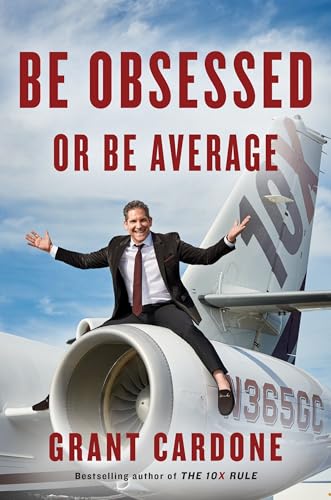
⚡️ What is Be Obsessed or Be Average about?
Be Obsessed or Be Average by Grant Cardone argues that mediocrity stems from playing it safe, and true success requires obsessive dedication. Through personal anecdotes and business strategies, Cardone outlines ten obsessions, including sales mastery, customer focus, and life domination, that fundamentally reshape success. The book positions obsession as the antidote to cultural complacency and challenges readers to reject average outcomes in favor of relentless pursuit of excellence. Cardone synthesizes his experiences overcoming homelessness and addiction to build a multibillion-dollar real estate empire as evidence of obsession’s transformative power.
🚀 The Book in 3 Sentences
- Be Obsessed or Be Average argues obsession isn’t a flaw but the only effective path to exceptional results.
- Average people follow comfort zones; obsessed individuals drive continuous improvement through sales domination and life control.
- Cardone prescribes daily obsession rituals to eliminate free time delusions and multiply business impact exponentially.
🎨 Impressions
Be Obsessed or Be Average delivers aggressive energy that matches Cardone’s personal journey from rock bottom to real estate moguls. This book summary works best when readers recognize obsession as disciplined focus rather than unhealthy fixation. Cardone’s prescriptions for dominating business areas and restructuring daily routines challenge conventional work-life balance narratives while emphasizing strategic commitment.
📖 Who Should Read Be Obsessed or Be Average?
This book summary strongly appeals to three audiences: entrepreneurs seeking exponential growth, professionals stuck at 70% capacity, and individuals ready to break patterned mediocrity. The obsession strategies particularly benefit those in sales-driven industries while offering universal success techniques applicable to personal development.
☘️ How the Book Changed Me
How my life / behaviour / thoughts / ideas have changed as a result of reading the book.
- Adopted daily goal reassessment to maintain obsession mindset
- Recognized sales-oriented techniques as universal communication superpower
- Started eliminating average-creating habits by marketing personal schedule to achieve 80%+ execution
✍️ My Top 3 Quotes
- ‘The goals of the obsessed are always a bit out of reach.’
- ‘The obsessed aren’t committed to popularity, they’re committed to success.’
- ‘Be ready to strike at all times.’
📒 Summary + Notes
This book summary reveals Grant Cardone’s 10 obsessions that turn average aspirations into dominant achievements. The text demonstrates how success strategies require relentless application across personal and professional spheres. Each obsession builds a framework for permanent performance elevation.
Chapter 1: Figure out obsessions
Cardone reframes obsession from pathology to performance accelerator. Average people suppress their true passions while obsessives mine intrinsic motivations through relentless self-questioning. The chapter outlines daily reflection frameworks about purpose, financial thresholds, and legacy to activate productive hysteria.
- Key insight: Average minds fear the future; obsessives design it through self-awareness
- Cardone’s example: He identified real estate passion through rehab journaling
- Personal application: Created obsession discovery matrix with client pain points and personal strengths
Chapter 2: Do not create others’ idea of success
External expectations create fragmented obsession. Cardone stresses independence when evaluating life programs made by parents, teachers, or social norms. Obsessed individuals create unique success metrics aligned with personal energy sources and value systems instead of following preset definitions.
- Key insight: Success clone traps; obsession demands authenticity
- Personal anecdote: Cardone rejected family’s financial safety obsession to pursue high-risk ventures
- Reflection: Started questioning advice from self-proclaimed ‘experts’ about achievable goals
Chapter 3: Over-promise and over-deliver
Traditional ‘under-promise, over-deliver’ thinking treats customers as obstacles. Cardone’s success techniques reframe expectations as accelerants, creating urgency through guaranteed excessive results. Obsessed people rewire risk perception through commitment-first methodology.
- Core method: Set delivery expectations that feel slightly terrifying
- Business example: Cardone guaranteed property sales within 30 days despite market norms
- Implementation tip: Use overplanning spreadsheets to structure impossible delivery timelines
Chapter 4: Everything is sales
All human interactions become sale opportunities in Cardone’s framework. Book summary details how sales isn’t mere transactional work but persuasive communication across romantic relationships, leadership, and personal projects. Obsessives master this universal skill to control outcomes conversations.
- Strategic principle: Every word spent contributes sales energy
- Sales anecdote: Cardone sold air conditioning repair simply by insisting on excellence
- Practical approach: Recorded sales calls to identify obsession-infused persuasion techniques
Chapter 5: Control your life
Obsessives dominate through pervasive control mechanisms. Cardone catalogs 24/7 domination mindset involving schedule optimization, fear management, and goal obsession. The book summary emphasizes systems over spontaneity as ultimate control method.
- Operation insight: Celebrate should-stress; daily tension equals performance gains
- Control example: Cardone’s live tracking of eight financial KPIs
- New behavior: Implemented obsession dashboards measuring progress in percentages
Chapter 6: Free time is a threat
Cardone destroys ‘balance’ myth through free time delusion analysis. Average performers schedule downtime; obsessives convert empty space to opportunity. Describes obsession strategy where sleep gives 3-4 hours, vacation becomes strategic thought experiments rather than disconnection.
- Key warning: Downtime chemicals rewire brain for weakness
- Work ethic example: Worked non-stop while others rested during rehab process
- Personal experiment: Started using wait times for client call reviews
Chapter 7: Feed the beast
Criticisms about free time culminate in ‘feed the beast’ destruction of saving mentality. Cardone positions reinvestment obsession as critical book summary highlight – spend money to create leverage points through employees, systems, and technology before fuel becomes abundant. Success maintenance requires dedicated consumption cycles.
- Finance technique: Always pursue next opportunity before finishing prior
- Reinvestment story: Spent entire first real estate profit on exclusive client targeting system
- Implementation lesson: Value creation > money preservation mindset shift
Chapter 8: Not afflicted, gifted
Cardone reframes ‘Type A’ personality as supreme advantage. Book summary redefines obsessive-compulsive traits from weaknesses to dominance indicators. Common criticisms about his relentless nature become strategic validation points under this obsession transformation model.
- Mindset shift: Control neuroses > suppress neuroses
- Gifted story: Cultivated property market disruption reputation despite skeptics
- Self-application: Started referring to my pacing tendencies as ‘execution fuels’
Chapter 9: Critics are fuel
Chapter redefines criticism handling through obsession lens. Cardone techniques suggest actual critic volume measurement directly correlates with achievement level. Obsessives channel negativity into work horsepower rather than contemplative paralysis. Doubt represents market validation standard.
- Core realization: No criticism = no progress
- Critics anecdote: Market drove high rental pricing strategy through endless criticism
- Behavior change: Started limiting strategy to 3 minutes of ‘naysayer energy’
Chapter 10: Find others who are obsessed
Human resources section of book summary explains how average teams create boxed mindset. Obsessive teams purposefully overhire, push boundaries, and abandon peer pressure limitations. Cardone’s leadership strategies guide readers through proactive obsession network building rather than passive cohabitation.
- Talent lesson: Great people never tolerate status quo
- Team story: Fired 20% of staff annually to maintain obsession standard
- Cultural application: Created obsession contract for new team members
Key Takeaways
This book summary crystallizes into three obsession strategies as primary lessons:
- Eliminate average mind trap vocabulary like ‘realistic’ from vocabulary
- Transform every conversation into potential sales techniques playground
- Control systems obsession although eliminates most excuses for lack of progress
Conclusion
This book summary demonstrates Grant Cardone’s obsession obsession benefits technology. Whether testing average versus obsessed mindset in personal goals or corporate expansion, Cardone’s strategies provide roadmap from mediocrity. My exploration of the business techniques shifted understanding from outcome-based thinking to permanent motion approach. The Be Obsessed or Be Average book summary reveals habitual obsession as key to unlocking potential and avoiding legacy of average destroyers. Now starting implementation of weekly obsession recalibration routines and team screening protocols.
More From Grant Cardone →
Discover more from AI Book Summary
Subscribe to get the latest posts sent to your email.