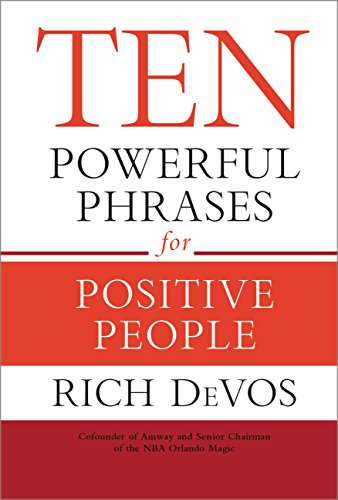
⚡️ What is 10 Powerful Phrases for Positive People about?
10 Powerful Phrases for Positive People by Rich DeVos is a concise yet profound guide to transforming your personal and professional life through the power of simple, intentional language. The core premise is that success isn’t just about grand strategies but is built upon the foundation of positive, affirming relationships. DeVos, co-founder of Amway, distills decades of leadership and life experience into ten specific phrases that, when used with sincerity, can mend broken trust, inspire action, foster loyalty, and create an environment of mutual respect and encouragement. This book is not about manipulation; it’s a masterclass in authentic communication that empowers you to build others up while elevating yourself. It’s a practical toolkit for anyone who wants to become a more effective leader, a more supportive family member, and a more positive force in the world.
🚀 The Book in 3 Sentences
- Lasting success in business and life is built on a foundation of strong, positive relationships.
- The principles of 10 Powerful Phrases for Positive People provide simple, actionable communication strategies to build and repair those relationships.
- Mastering these phrases requires genuine sincerity and consistent practice to unlock their transformative power.
🎨 Impressions
My initial impression was that the book seemed almost too simple, but I quickly realized its genius lies in that simplicity. In a world of complex leadership theories, 10 Powerful Phrases for Positive People brings us back to the elemental truth that our words have immense power. It felt less like reading a business book and more like receiving wisdom from a seasoned mentor. The emphasis on sincerity is a critical thread throughout; DeVos makes it clear that these are not magic words but tools that must be wielded with an authentic heart. I appreciated the direct, no-nonsense approach, making the concepts incredibly easy to understand and, more importantly, to remember and apply in daily life.
📖 Who Should Read 10 Powerful Phrases for Positive People?
This book is essential reading for anyone in a leadership or management position, from CEOs to team leads, as its techniques are fundamental for motivating and retaining talent. Parents and educators will find invaluable strategies for building confidence and strong character in children. Salespeople, customer service representatives, and anyone in a client-facing role will discover powerful techniques for building rapport and trust. Ultimately, 10 Powerful Phrases for Positive People is for anyone who wants to improve their relationships, communicate more effectively, and leave a positive impact on everyone they meet.
☘️ How the Book Changed Me
\p>Reading this book fundamentally shifted my awareness of my daily communication. I began to pay closer attention to not just what I was saying, but the intent and impact behind my words. It made me realize how often I miss opportunities to encourage or express gratitude. The simple framework gave me the confidence to be more vulnerable and open in my relationships, both professional and personal.- I now consciously look for opportunities to say “I’m proud of you” to my colleagues, which has noticeably improved team morale.
- I’ve become much quicker to offer a sincere “I’m sorry” or “I was wrong” when I make a mistake, which has diffused potential conflicts faster than any argument ever could.
- The phrase “I believe in you” has become a staple in my mentoring conversations, and I’ve seen firsthand how it can unlock someone’s potential.
✍️ My Top 3 Quotes
- “Being positive doesn’t mean you don’t have negative thoughts. It means you don’t let those thoughts control you.”
- “The most powerful way to show your belief in someone is not just to tell them, but to give them a chance to prove you right.”
- “Gratitude is the least expressed of all emotions, yet it is the one that does the most good.”
📒 Summary + Notes
The central philosophy of 10 Powerful Phrases for Positive People is that our words are the building blocks of our relationships and, by extension, our success. Rich DeVos presents ten simple, yet profound, phrases that act as tools to construct a life of positive influence. Each chapter is dedicated to one phrase, exploring its psychological impact, providing real-world examples, and offering practical advice on its application. The book argues that these are not just feel-good platitudes but strategic communication techniques that can resolve conflict, inspire greatness, and foster unshakable loyalty. The true power lies in the consistent and sincere application of these phrases, transforming them from mere words into a way of life.
Chapter 1: “I’m Wrong!”
This chapter tackles one of the hardest phrases to say: “I’m wrong!” DeVos explains that admitting fault is not a sign of weakness but a display of immense strength and character. It immediately disarms conflict, shows humility, and builds trust. By owning your mistakes, you take control of the situation and demonstrate a commitment to truth over ego, paving the way for genuine resolution and learning.
- Key Concept: Humility is a catalyst for trust and respect; people are more willing to follow someone who is honest about their fallibility.
- Example: A leader admitting a strategic error in a company meeting can re-energize a team more than blaming external factors.
- Application: I now practice saying “I was wrong” in small, low-stakes situations to make it easier when it truly matters.
Chapter 2: “I’m Sorry”
DeVos distinguishes a genuine apology from the casual “sorry” we often use. “I’m sorry” is about taking responsibility for the hurt or inconvenience you’ve caused another person. It’s an act of empathy that validates the other person’s feelings and begins the process of healing a relationship. A sincere apology can mend fences that years of neglect have broken, restoring connection and goodwill.
- Key Concept: A true apology focuses on the other person’s pain, not on defending your own intentions.
- Example: Saying “I’m sorry I was late and made you worry” is far more effective than “Sorry, but traffic was bad.”
- Application: When I apologize, I now make sure to explicitly state what I am sorry for to show I understand the impact of my actions.
Chapter 3: “You Can Do It”
This phrase is a powerful injection of confidence. DeVos illustrates how saying “You can do it” can be the very thing that propels someone past their self-doubt and toward success. It’s an act of faith in another’s potential that can help them see their own abilities. This chapter emphasizes that as leaders, parents, and colleagues, one of our greatest roles is to be a source of encouragement, helping others conquer challenges they thought were insurmountable.
- Key Concept: Your belief in someone’s ability can act as a catalyst for them to believe in themselves.
- Example: A manager telling a nervous employee, “I know this presentation is a challenge, but you can do it,” can change their entire performance.
- Application: I make a point to say this to team members when they take on a new task, especially when they express hesitation.
Chapter 4: “I Believe In You”
While “You can do it” focuses on a task, “I believe in you” speaks to a person’s character and potential. DeVos explains this is a deeper, more profound affirmation. It tells someone that you have faith in who they are, not just what they can do. This phrase builds unshakable loyalty and can be a cornerstone of a mentoring relationship, giving someone the security to take risks and grow, knowing they have your unwavering support.
- Key Concept: Expressing faith in someone’s character is more powerful than praising a single achievement.
- Example: Telling a young entrepreneur, “I believe in you and your vision,” can sustain them through inevitable failures.
- Application: I use this phrase with my direct reports during our one-on-one meetings to reinforce my confidence in their long-term growth.
Chapter 5: “I’m Proud of You”
This chapter is about the power of recognition and validation. Saying “I’m proud of you” acknowledges effort and celebrates achievement in a deeply personal way. DeVos argues that people crave this kind of affirmation more than almost anything else. It’s not just about saying “good job”; it’s about connecting their success to your sense of joy and respect for them. This phrase builds a powerful emotional bond and motivates future excellence.
- Key Concept: Publicly and privately expressing pride in someone’s accomplishments solidifies their value to the team or family.
- Example: A parent telling their child, “I’m so proud of how hard you studied for that test,” focuses on the effort, not just the grade.
- Application: After a project is completed successfully, I make sure to tell the team members individually that I am proud of their specific contributions.
Chapter 6: “I Trust You”
Trust is the foundation of all healthy relationships, and this chapter is about giving it freely. Saying “I trust you” is a powerful act of empowerment. DeVos explains that it communicates confidence in a person’s judgment and integrity. By delegating not just a task, but also the authority to complete it, you show that you respect their capabilities. This phrase fosters autonomy, encourages responsibility, and builds a culture of ownership.
- Key Concept: Trust is a multiplier; when you trust people, they are more likely to act in a trustworthy manner.
- Example: A CEO telling a new division head, “I trust you to lead this division,” gives them the confidence to make bold decisions.
- Application: When assigning a new responsibility, I explicitly say, “I trust you to handle this,” to remove any doubt about my confidence in them.
Chapter 7: “I Respect You”
Respect goes beyond trust or admiration; it’s about valuing someone as an individual. In this chapter, DeVos highlights that saying “I respect you” acknowledges their inherent worth, their opinions, and their experiences. It’s especially powerful when expressed across differences of opinion. This phrase can de-escalate tension and create a safe space for open dialogue, showing that even if you disagree, you value the person and their perspective.
- Key Concept: Respect is the key to collaboration; it allows people to disagree productively without damaging the relationship.
- Example: Saying to a colleague, “I see it differently, but I respect your point of view,” validates their contribution while allowing for debate.
- Application: In heated discussions, I’ve started using this phrase to remind everyone that we are on the same team, even with different ideas.
Chapter 8: “I Love You”
DeVos broadens the definition of “I love you” beyond romantic or familial contexts to encompass a deep sense of care, commitment, and concern for another’s well-being. In a professional setting, it translates to genuinely caring for your team members as people. This chapter explores how expressing this kind of selfless love creates the ultimate bond of loyalty. It’s about putting others’ needs ahead of your own and creating an environment where people feel truly valued and cared for.
- Key Concept: Genuine care for others is the most powerful motivator and the foundation of a truly great team or family.
- Example: A leader asking an employee who is struggling, “How are you really doing?” and offering support, demonstrates this principle in action.
- Application: While I don’t say “I love you” at work, I actively practice the principle by showing genuine concern for my colleagues’ well-being.
Chapter 9: “Thank You”
This chapter champions the simple but often forgotten act of gratitude. DeVos explains that “thank you” is a powerful affirmation of someone’s effort and contribution. It costs nothing but pays enormous dividends in morale and goodwill. The key is to be specific and timely. A heartfelt, specific “thank you” makes people feel seen and appreciated, encouraging them to continue giving their best. It’s the easiest way to create a positive, appreciative culture.
- Key Concept: Gratitude is a performance enhancer; people who feel appreciated are more engaged and productive.
- Example: Instead of a generic “thanks,” say “Thank you for staying late to finish that report; your dedication made a real difference.”
- Application: I end every day by writing down one specific thing I am thankful for and one person I need to thank the next day.
Chapter 10: “I’ll Be There”
The final phrase is about the power of presence and reliability. “I’ll be there” is a promise of support in times of need. DeVos teaches that being there for someone—whether they are celebrating a win or enduring a crisis—is the ultimate expression of commitment. This promise builds deep, unbreakable bonds. It shows that your support isn’t conditional and that you are a reliable ally, creating a profound sense of security for those around you.
- Key Concept: Your presence is a powerful gift; being physically and emotionally there for people is irreplaceable.
- Example: Showing up to a colleague’s family funeral or a friend’s art opening speaks louder than any words of encouragement.
- Application: I now actively look for opportunities to offer this specific promise of support, and I make sure to follow through every single time.
Key Takeaways
The lessons from 10 Powerful Phrases for Positive People are both timeless and immediately applicable. The core message is that our success is deeply intertwined with the quality of our relationships, and our language is the primary tool we use to build them. The book teaches that sincerity is the non-negotiable ingredient that gives these phrases their power. It’s a reminder that leadership and influence are not about authority, but about connection, encouragement, and service. By intentionally incorporating these phrases, we can become architects of a more positive and supportive environment for everyone we encounter.
- The techniques in 10 Powerful Phrases for Positive People work best when they are authentic expressions of your true feelings, not empty scripts.
- Positive language is a proactive strategy; it builds a reservoir of goodwill that can help you navigate challenges and conflicts.
- These phrases are not just for others; using them can change your own mindset, making you more grateful, humble, and encouraging.
- Consistency is crucial; the transformative impact of these phrases is realized over time through regular, sincere use.
Conclusion
p>10 Powerful Phrases for Positive People is a deceptively simple book with an incredibly profound message. Rich DeVos provides a clear, actionable roadmap for becoming a person of positive influence through the deliberate use of language. It’s a reminder that the most effective strategies for success are often rooted in the most fundamental human virtues: humility, gratitude, respect, and encouragement. This book is a valuable investment for anyone looking to enrich their relationships and become a better leader, parent, or friend. I highly recommend reading it and keeping its wisdom close at hand, as the lessons within are meant to be practiced and lived out every single day.More From Rich DeVos →
Discover more from AI Book Summary
Subscribe to get the latest posts sent to your email.